Showing 41-60 of 132 results
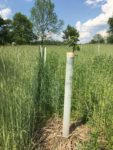
Agroforestry an Alternative for Farmers Transitioning Away from Tobacco Production
BEREA, Kentucky – A Kentucky farmer, exploring alternatives for tobacco production, has found that elements of an agroforestry system may prove viable to increasing farm profitability and providing environmental benefits. Through a Southern Sustainable Agriculture Research and Education (SSARE) Producer Grant, Matthew Wilson of Rindlewood Farm studied the feasibility of incorporating sweet sorghum and pasture […]
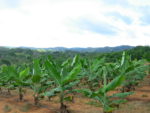
Cover Crops Improve Soil Quality in Plaintain Production Systems
GURABO, Puerto Rico -- In humid, tropical environments where soil organic matter decomposes at a rapid rate, efforts are being made to maintain and improve soil health using cover crops, specifically in high intensive cropping systems like plantain production. In a Producer Grant project, farmer Duamed Colon-Carrion studied the potential benefits of cover crops on […]

Transforming Existing Forested Land into Silvopasture Systems
GREENVILLE, South Carolina – Livestock producers with patches of established forested land on their farm can turn to agroforestry practices as an option to increase economic stability while enhancing environmental quality. Researchers at Furman University, through a Southern Sustainable Agriculture Research and Education (SSARE) grant, studied the feasibility of transforming forested land on farms in […]

Mississippi Crop Farmers Using Irrigation Management Tools to Save Water While Staying Profitable
STONEVILLE, Mississippi – Will Hart, a young 30-something farmer who produces corn and soybeans on 3,000 acres in the Mississippi Delta, remembers the “old way” his grandfather determined whether the crops needed water. “We’d go out in the field and kick the dirt,” said Hart. “If it was dry, then the crops got water.” Today, […]
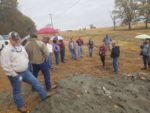
Mississippi State University Leading Efforts to Help Landowners Implement Conservation Practices on the Farm
STARKVILLE, Mississippi – Mississippi State University is leading by example when it comes to adopting and implementing conservation land practices. Leslie Burger, a conservation education specialist with the Department of Wildlife, Fisheries and Aquaculture, along with Extension professor Beth Baker, are part of a large team of university scientists who are leading efforts to improve […]

Cover Crops Incorporated into Rotational Grazing Improves Soil Health
BATON ROUGE, Louisiana – Over-seeding a diverse cool-season cover crop mix into a rotationally grazed warm-season grass pasture appears to improve soil health, especially when the system is managed over a longer period of time. In a limited study, funded by a Southern Sustainable Agriculture Research & Education (SSARE) Graduate Student Grant, Louisiana State University […]

Low-external-input Sustainable Agriculture Provides Environmental Benefits and Economic Gains in Rice Production
STARKVILLE, Mississippi – Rice, for all of its importance as a global food staple, can have a number of environmental tradeoffs. Intensively managed, the crop can put a strain on natural resources, particularly soil and water. But a more sustainable production system may enhance environmental quality at an economic gain for the farmer, based on […]
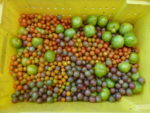
Grafting Can Help Control Diseases in Organic High Tunnel Tomatoes
GAINESVILLE, Florida – Grafting can help control diseases in organically grown high tunnel tomatoes, according to the results of a University of Florida study. In the study, funded by a Southern Sustainable Agriculture Research & Education (SSARE) On-Farm Research Grant, specialty tomatoes grafted onto two disease-resistant rootstocks effectively managed Fusarium wilt and improved the overall […]

The Performance of Cover Crops in Minimally Tilled Forage-based Grazing Systems
In a Southern SARE-funded Graduate Student Grant (GS15-152), “Evaluation of Winter Annual Cover Crops Under Multiple Residue Management: Impacts on land management, soil water depletion, and cash crop productivity,” Texas Tech University researchers investigated five cover crops species as potential complements to a warm-season beef-stocker grazing system. The impact of the project was two-fold: Stabilize the soil surface from excessive wind erosion and desiccation; and strengthen rural communities by ensuring the persistence of profitable agriculture in the region.
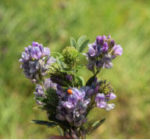
Integrating Legumes with Grass to Improve Forage-Livestock Systems
In a Southern SARE-funded Research and Education Grant (LS14-261), "Long-term Agroecosystems Research and Adoption in the Texas Southern High Plains -- Phase III," Texas Tech University researchers conducted a steer grazing trial comparing a grass only system to a grass-legume system for animal productivity and water use efficiency.
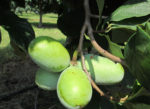
Improving Pawpaw Production with Grafting
FRANKFORT, Kentucky – Kentucky State University researchers, through a grafting technique common in apple production, have been successful in producing higher-yielding, higher-quality fruit in pawpaws. The results help promote a low-input system to boost small-scale pawpaw production for small farmers. Through a $203,395 Southern Sustainable Agriculture Research & Education Grant, horticulturist Kirk Pomper and his […]

Using Multispectral Imaging Technologies to Maximize Yields in Sugarcane
HOUMA, Louisiana – When it comes to profitable sugarcane, the goal of every grower is to achieve the highest possible sucrose yield at the lowest production cost possible. Sugarcane yields correlate with nitrogen application, and as producers continue to get squeezed between decreasing acreage and higher input costs, such as fertilization, they are looking for […]
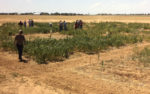
Texas Farmers Learn to Build Soil Health Through No-till and Cover Crops
VERNON, Texas – It’s a hot, dry, windy summer day on the plains of North Texas, and a group of farmers are standing in the middle of a field to learn how techniques to build soil health benefit their cash crops in Texas’ harsh environmental conditions. “This is what no-till looks like in the first […]

University of Florida Researchers Expanding the Cover Crop Toolbox for Farmers
HAWTHORNE, Florida – Several new cover crop varieties that have the potential to overcome the limitations of their commercial counterparts are being targeted for use in Florida to provide farmers with a more diverse selection of plants that excel in soil health, weed suppression and pest management. A small group of farmers, Extension agents and […]
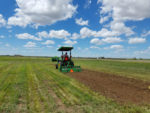
In Drought-stricken Texas, Researchers are Finding Water Conservation Solutions in Cover Crops
LUBBOCK, Texas – In the Texas High Plains, a region where the water-depleting Ogallala Aquifer endangers productive agriculture, and hot, arid winds erode soils and rob them of nutrients, cover crops offer a useful option to livestock producers. In a two-year graduate student study at Texas Tech University, funded through the Southern Sustainable Agriculture Research […]
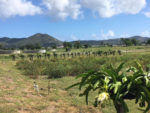
Agriculture in U.S. Virgin Islands Challenging, But Prevailing with Sustainable Agriculture Practices
CHRISTIANSTED, St. Croix – For months, a 14,000-gallon water tank has been sitting on its side in the middle of Frederick Miller’s Moringa tree orchard. Winds from Hurricane Maria had rolled the tank down the hillside of his farm, and he still hasn’t figured out yet how he’s going to move it. Yvette and Dale […]
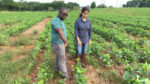
Cover Crops Do Not Deplete Stored Water in the Soil Profile, Clemson Researchers Find
CLEMSON, South Carolina – Among the myriad of benefits cover crops provide to a row crop or vegetable operation, Clemson University researchers have found another one: Cover crops do not deplete water stored in the soil profile, thus preserving the precious resource for the cash crop – an all important function, specifically in times of […]
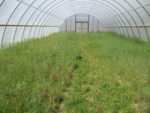
Cover Crops Have Benefits in High Tunnels
GLENWOOD, Georgia – Barley and hairy vetch growing vigorously in a high tunnel at Lola’s Organic Farm in southeast Georgia were going to seed. It was mid-April. Time to mow and prepare the soil for the summer’s cash crops: ginger and turmeric. Since last year, couple Jennifer Taylor and Ron Gilmore – USDA certified organic […]
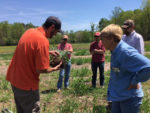
It Doesn't Take Long for Soils to Reap the Benefits of Cover Crops
HORSE SHOE, North Carolina – Whitaker Farms, a family vegetable operation nestled on the edge of the Pisgah National Forest, has been managed conventionally for generations. But last year, owner Phillip Whitaker decided to take part in a study to test the benefits of no-till and cover crops on soil health. Despite the short period […]

Artificial Nesting Sites Attract Native Pollinators
LAWRENCEVILLE, Georgia – Artificial nesting sites for pollinators placed in apple orchards have shown to boost native bee populations, according to results of a Georgia Gwinnett College study. In a Southern SARE-funded On-Farm Research Grant project, researchers focused on nesting sites for mason bees and mining bees – the workhorses of the native bee world […]