Showing 241-260 of 327 results
Principles of Sustainable Agriculture
GAINESVILLE, Florida – Taking charge of change, building community relationships, recognizing resource limitations, striving for a high-quality product, and balancing passion with practical business sense are just some principles that tend to make a farmer a role model in sustainable agriculture practices. University of Florida researchers took the knowledge and expertise of agricultural professionals and […]

Cover Crops Can Help Control Pests by Fostering Natural Enemies
TALLAHASSEE, Florida – Cover crops used as refuge crops in vegetable production can control insect pests by fostering populations of natural enemies and competitor non-virus vectoring species, based on the results of USDA-ARS research. Research entomologists Stephen Hight with the USDA-ARS Insect Behavior and Biocontrol Research Unit in Florida, and Stuart Reitz with Oregon State […]
Prototype Farm Machine Expands Applications in Organic Vegetable Crop Production
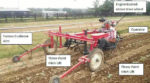
LEXINGTON, Kentucky – University of Kentucky researchers have designed, built and tested a low-cost, mechanized system for organic vegetable production to help small-scale growers reduce their labor costs, increase their scale of operations, reduce input costs and increase production compared to conventional organic production practices. In a Southern Sustainable Agriculture Research and Education (SSARE) On-Farm […]
Compost Made with Freshwater Fish Improves Vegetable Yields Based on South Carolina Farmer Study
JOHNS ISLAND, South Carolina – Compost made from freshwater fish appears to perform just as well as compost made from saltwater fish in vegetable production, based on the results of a Southern Sustainable Agriculture Research & Education (SSARE) farmer project. The results point to increased opportunities of using freshwater fish waste as compost in areas […]
Artificial Light Sources in Chicken Houses Increase Egg Laying in Hens During Fall and Winter
COMMERCE, Texas – Research at Texas A&M University-Commerce has found that adding a safe, artificial light source to the coops of pasture-raised poultry increases egg laying in hens in the fall and winter – a time of the year when egg production in pasture poultry generally declines. Graduate student Margaret Morgan said that the main […]
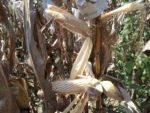
Breeding Organic Corn Varieties to Resist GMO Contamination
KNOXVILLE, Tennessee – Breeders with the University of Tennessee are developing organic corn varieties that cannot be contaminated by GMO corn (genetically modified organisms) via cross-pollination. A corn ear from a Ga1s line pollinated with pollen from a GMO corn hybrid (upper ear with no seeds) and the same line pollinated with pollen from a […]
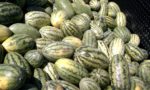
UGA Studying Biocontrol Method to Control Cucurbit Diseases
ATHENS, Georgia – Some species of naturally occurring bacteria, when applied to the flowers of watermelon plants, can reduce the spread of bacterial fruit blotch – a cucurbit disease that causes fruit rot and economic losses. The technique of applying bacteria to the stigmas of female flowers to slow the spread of bacterial fruit blotch […]
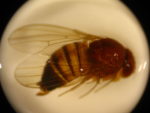
Expanding the IPM Toolbox to Fight Spotted Wing Drosophila
GAINESVILLE, Florida – University of Florida researchers are expanding the Integrated Pest Management (IPM) toolbox for blueberry growers fighting the spotted wing Drosophila (Drosophila suzukii) – a destructive pest of small fruit crops. Through a Southern Sustainable Agriculture Research & Education (SSARE) Graduate Student Grant (GS12-114), entomology graduate student Lindsy Iglesias, along with professor Oscar […]
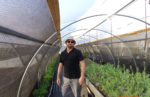
High Tunnel Pest Exclusion System
Insect pests are one of the major problems in organic production systems. Organic IPM practice consists of a three-tiered approach consisting of systems-based practices, mechanical tactics, and biorational insecticides. Mechanical tactics encourage the use of physical barriers for pest exclusion. This bulletin provides preliminary research data and field observations about the success of shade cloths, or high tunnel pest exclusion (HTPE) systems, as a more permanent barrier system around the high tunnels.
Whole-Farm Integrated Pest Management (IPM) Video Series
If you want to know the best ways to manage pests via integrated pest management, you can find all of the information you need in a series of video modules created by University of Florida IFAS Extension faculty. These IPM strategy modules are targeted for those looking to implement IPM strategies either on a whole-farm or whole-landscape level.
Cover Crops and Soil Biology: What Do We Know?
Investigating soil biology is a wild, unpredictable zoological ride. From the smallest organisms on Earth (viruses) to earthworms, cover crop selection and management is affected by and influences soil biology in ways we cannot completely predict.
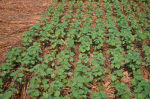
Cover Crop Establishment and Residue Management
Benefits associated with cover crops that may include erosion control, increased organic matter, increased water infiltration, and weed suppression are all typically enhanced as biomass levels increase. In order to ensure adequate levels of biomass, growers should recognize the importance of cover crop establishment.
Evaluating Nutrient, Soil Health, and Economic Benefits of Compost Additions to Summer Cover Crops for Strawberries in North Carolina
Over the past 8 years, a team of multidisciplinary faculty and students at NC State University have conducted various field-based studies at the Center for Environmental Farming Systems (CEFS) and on-farm research examining the impact of summer cover crops, compost additions and applications of beneficial arbuscular mycorrhizal fungi and vermicompost on soil health, nutrient availability, and yields in conventional and organic strawberry production systems.
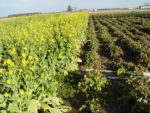
Cover Crops for Weed Management in Row Crops
The use of cover crops for weed control can help conventional producers combat herbicide-resistant weeds and organic producers reduce dependency on cultivation as their primary weed control mechanism.
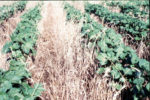
Economics of Cover Crops I: Profitability of Cover Crops in Row Crop Production and Federal Cost Share for Cover Crops
Many agronomic benefits of covers are also economic benefits. But there are real and perceived agronomic and economic challenges to adopting cover crops. Researchers at the USDA-ARS, National Soil Dynamics Laboratory (NSDL) in Auburn, Alabama and at the University of Georgia—Tifton have past and current research that addresses the challenges faced by producers.
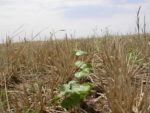
Economics of Cover Crops II (Part 1): USDA-NRCS Cover Crop Economics Decision Support Tool
Developed by USDA-Natural Resources Conservation Service (NRCS) economists, Lauren Cartwright (Missouri) and Bryon Kirwan (Illinois), The Cover Crop Economic Decision Support Tool is designed to help producers, landowners, planners, and others make informed decisions when considering adding cover crops to their production systems.
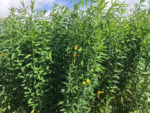
Economics of Cover Crops II (Part 2): Benefits of Cover Crops and No-Till Vegetable Production in North Alabama
While the benefits of cover crops are similar regardless of cash crop, there are a number of benefits that are particularly important to vegetable producers. The main benefits of cover crops in vegetable production include increased organic matter; additional N through the use of legumes; suppressing disease, nematodes, and weeds; reducing soil erosion; providing habitat for beneficial insects; and improving soil tilth.
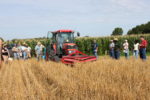
Equipment Demonstration and Conservation Systems Overview
Conservation tillage combined with high residue cover crops (Conservation Systems) can maximize residue production and minimize residue decomposition to promote the increase in organic matter across degraded soils of the Southeast, despite climatic conditions.
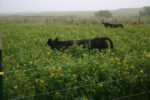
Grazing Cover Crops in Cropland
For some producers with extensive experience using cover crops, grazing can be a ‘next step’ in obtaining additional economic value while achieving environmental stewardship.
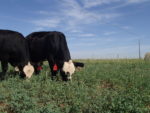
Introducing Annuals in Grazed Pastures
Annual cover crops provide ecosystem benefits to perennial-based pasture systems by introducing quality forage at opportune times of the year, creating a more diverse farm habitat, and providing opportunities to renovate overused or underutilized areas of the farm.