Showing 241-260 of 338 results

Business Decision-Making Tools Available from Southern SAWG
FAYETTEVILLE, Arkansas – Ag service providers working with small to mid-scale producers on business decision-making have a series of resource tools available to them that address profitability management challenges faced by those in the industry. Through a Southern Sustainable Agriculture Research & Education (SSARE) Professional Development Program Grant, the Southern Sustainable Agriculture Working Group (SSAWG) […]
SARE Fellows Tour, a Look at Sustainable Ag Across the Country, Makes a Stop in Texas
D’HANIS, Texas -- Travis Krause lets out a loud cattle call. Within seconds, his herd appears in the distance among the tall grass, brush and trees of the South Texas Plains, and makes a fast trot to where the young farmer is standing. The animals line up side by side as if preparing for a […]
University of Kentucky Resources for Small Fruit Growers
LEXINGTON, Kentucky – University of Kentucky Cooperative Extension, through a Southern Sustainable Agriculture Research and Education (SSARE) On-Farm Research Grant, has developed a series of outreach materials for small fruit producers to aid in disease management. “Like many diseases of small fruit, they are best managed using cultural practices, such as sanitation. Thus, we developed […]
Berries Thrive in High Tunnels, But Be Aware of Pests, According to University of Arkansas Study
FAYETTEVILLE, Arkansas – A University of Arkansas study has found that using high tunnels in berry production can increase yields, extend the harvest season, and improve fruit quality compared to field production. However, care must be taken to manage pests. In the Southern Sustainable Agriculture Research & Education (SSARE)-funded project (LS12-250), “Extending the Market Season […]
Cover Crops Acting as Trap Crops Protect Vegetables from Pests
LIVE OAK, Florida – For farmers in central Florida, planting cover crops in strips as a trap crop alongside cash crops is proving to be a highly effective method for attracting beneficial insects and controlling pests. Farmers have been so pleased with the results that they have fully adopted the Integrated Pest Management (IPM) strategy […]
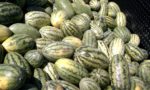
A Natural Method of Reducing Post-Harvest Fruit Decay Found
FORT PIERCE, Florida – University of Florida researchers, through a Southern Sustainable Agriculture Research & Education grant, have found a natural method of reducing post-harvest citrus fruit decay. In a SSARE Graduate Student Grant study, researchers found that essential oils, specifically carvacrol and thymol, significantly decrease ‘Ruby Red’ grapefruit natural decay, weight loss and chilling […]
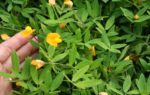
Cover Crops Reduce Pest Numbers and Improve Cash Crop Yields
GAINESVILLE, Florida – Preliminary research from University of Florida has found that incorporating root-knot nematode-resistant cover crops in a perennial peanut rotation reduces pest numbers in the cash crop and improves yields. The results may be helpful for producers who choose top-yielding, yet susceptible, peanut cultivars, as well as resistant cultivars that historically carry a […]
What Can Be: Regional Food Systems
This video outlines the economic redevelopment project of Working Landscapes in Warrenton, North Carolina, telling the story of two rural leaders who moved home to Warren County to contribute to their local economy by building a small processing center.

Biomass Energy Training Curriculum
This curriculum provides training on biomass energy to extension agents and local officials so that they may deliver this information to their stakeholders. While it is written as a training guide for TN, much of the information is applicable throughout the Southeastern US region.
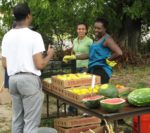
North Carolina Study Shows Local Foods a Driver for Economic Development, Especially in Rural Areas
RALEIGH, North Carolina – North Carolina farms that sell directly to consumers are more interconnected with their local economies than non-direct-to-consumer farms, and have a greater multiplier effect of generated revenue, based on the results of a North Carolina State University survey. The results, which could have applicability on a regional level, are intended to […]
Perennial Peanuts Shine as N Fertilizer Alternatives in Forage Production
MARIANNA, Florida – Perennial peanuts incorporated in forage grass production, such as bermudagrass and bahiagrass, continue to shine as nitrogen fertilizer alternatives to commercial inputs, according to University of Florida research. Based on the results of a Southern Sustainable Agriculture Research & Education (SSARE) Graduate Student Grant, warm-season perennial legumes, in some cases, reduced nitrogen […]
Principles of Sustainable Agriculture
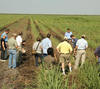
GAINESVILLE, Florida – Taking charge of change, building community relationships, recognizing resource limitations, striving for a high-quality product, and balancing passion with practical business sense are just some principles that tend to make a farmer a role model in sustainable agriculture practices. University of Florida researchers took the knowledge and expertise of agricultural professionals and […]

Cover Crops Can Help Control Pests by Fostering Natural Enemies
TALLAHASSEE, Florida – Cover crops used as refuge crops in vegetable production can control insect pests by fostering populations of natural enemies and competitor non-virus vectoring species, based on the results of USDA-ARS research. Research entomologists Stephen Hight with the USDA-ARS Insect Behavior and Biocontrol Research Unit in Florida, and Stuart Reitz with Oregon State […]
Prototype Farm Machine Expands Applications in Organic Vegetable Crop Production
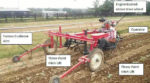
LEXINGTON, Kentucky – University of Kentucky researchers have designed, built and tested a low-cost, mechanized system for organic vegetable production to help small-scale growers reduce their labor costs, increase their scale of operations, reduce input costs and increase production compared to conventional organic production practices. In a Southern Sustainable Agriculture Research and Education (SSARE) On-Farm […]
Compost Made with Freshwater Fish Improves Vegetable Yields Based on South Carolina Farmer Study
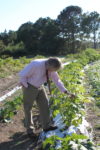
JOHNS ISLAND, South Carolina – Compost made from freshwater fish appears to perform just as well as compost made from saltwater fish in vegetable production, based on the results of a Southern Sustainable Agriculture Research & Education (SSARE) farmer project. The results point to increased opportunities of using freshwater fish waste as compost in areas […]
Artificial Light Sources in Chicken Houses Increase Egg Laying in Hens During Fall and Winter
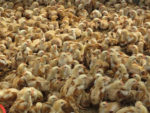
COMMERCE, Texas – Research at Texas A&M University-Commerce has found that adding a safe, artificial light source to the coops of pasture-raised poultry increases egg laying in hens in the fall and winter – a time of the year when egg production in pasture poultry generally declines. Graduate student Margaret Morgan said that the main […]
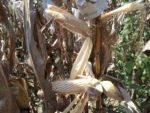
Breeding Organic Corn Varieties to Resist GMO Contamination
KNOXVILLE, Tennessee – Breeders with the University of Tennessee are developing organic corn varieties that cannot be contaminated by GMO corn (genetically modified organisms) via cross-pollination. A corn ear from a Ga1s line pollinated with pollen from a GMO corn hybrid (upper ear with no seeds) and the same line pollinated with pollen from a […]
UGA Studying Biocontrol Method to Control Cucurbit Diseases
ATHENS, Georgia – Some species of naturally occurring bacteria, when applied to the flowers of watermelon plants, can reduce the spread of bacterial fruit blotch – a cucurbit disease that causes fruit rot and economic losses. The technique of applying bacteria to the stigmas of female flowers to slow the spread of bacterial fruit blotch […]
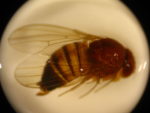
Expanding the IPM Toolbox to Fight Spotted Wing Drosophila
GAINESVILLE, Florida – University of Florida researchers are expanding the Integrated Pest Management (IPM) toolbox for blueberry growers fighting the spotted wing Drosophila (Drosophila suzukii) – a destructive pest of small fruit crops. Through a Southern Sustainable Agriculture Research & Education (SSARE) Graduate Student Grant (GS12-114), entomology graduate student Lindsy Iglesias, along with professor Oscar […]
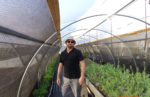
High Tunnel Pest Exclusion System
Insect pests are one of the major problems in organic production systems. Organic IPM practice consists of a three-tiered approach consisting of systems-based practices, mechanical tactics, and biorational insecticides. Mechanical tactics encourage the use of physical barriers for pest exclusion. This bulletin provides preliminary research data and field observations about the success of shade cloths, or high tunnel pest exclusion (HTPE) systems, as a more permanent barrier system around the high tunnels.