Showing 21-40 of 68 results
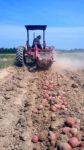
Researchers Recommend New Strategies to Suppress Southern Potato Blight
PAINTER, Virginia – Earlier planting dates coupled with disease-tolerant cultivars of potatoes are recommended strategies to suppress southern potato blight, according to Virginia Tech researchers. The fungal disease, caused by the soil born pathogen Sclerotium rolfsii, affects the stems of the plants and produces lesions on the tubers, impacting quality and yields. In a Southern […]
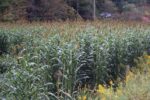
Exploring Alternative Methods for Controlling A Major Pest in Sweet Sorghum
LEXINGTON, Kentucky – University of Kentucky researchers are exploring alternative methods for controlling sugarcane aphid in sweet sorghum, a major crop for farmers in the state. Through a Southern Sustainable Agriculture Research and Education (SSARE) On-Farm Research Grant, entomologist Nathan Mercer and his colleagues are studying a combination of parasitoids and insecticidal soaps as a […]
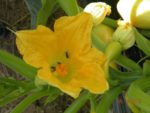
Using Row Covers to Protect Squash from Insect Pests
DURANT, Oklahoma -- Using row covers on squash protects the vegetable crop from insect pests such as the squash bug, but timing of their removal can impact pollination and subsequent plant yields, according to Oklahoma State University research. In a two-year study, horticulturist Jim Shrefler analyzed pest and pollinator incidences and measured squash yields using […]
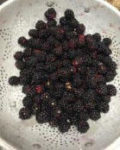
Using Mineral Clay to Manage Pests and Increase Fruit Quality and Yield in Blackberries
SEARCY, Arkansas -- Primocane blackberries, which can extend the fruiting season by months over traditional plant varieties, are changing the way farmers are growing berries. But they don’t come without their pest and production challenges, which University of Arkansas researchers are trying to solve with a naturally occurring soil mineral. In a Research and Education […]
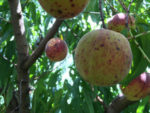
More Targeted Use of Horticultural Oils in Peach Trees Better Manages San Jose Scale, UGA Researchers Find
ATHENS, Georgia – Using horticultural oil sprays as an Integrated Pest Management (IPM) strategy to control San Jose scale in peach trees can be an effective alternative to chemical applications, and University of Georgia researchers have found that the best control comes after trees have been pruned, allowing for lower application rates than previously recommended. […]
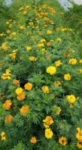
Look to a Trap Crop-Cover Crop Mix as an IPM Strategy in Vegetable Production
GAINESVILLE, Florida – Vegetable farmers looking to curtail pesticide use may find alternative pest management strategies in the form of a trap crop/cover crop mix. Through a Southern Sustainable Agriculture Research & Education (SSARE) Graduate Student Grant, University of Florida researchers studied the application of African Marigold (Tagetes erecta) and cowpea (Vigna unguiculata) for Integrated […]

University of Florida Researchers Expanding the Cover Crop Toolbox for Farmers
HAWTHORNE, Florida – Several new cover crop varieties that have the potential to overcome the limitations of their commercial counterparts are being targeted for use in Florida to provide farmers with a more diverse selection of plants that excel in soil health, weed suppression and pest management. A small group of farmers, Extension agents and […]
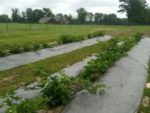
Sustainably Knocking Out Pests and Increasing Fruit Production and Quality of Primocane Blackberries
SEARCY, Arkansas – Primocane blackberries, which can extend the fruiting season by months over traditional plant varieties, are changing the way farmers are growing berries. But they don’t come without their pest and production challenges, which University of Arkansas researchers are trying to solve with a naturally occurring soil mineral. Through a Southern Sustainable Agriculture […]
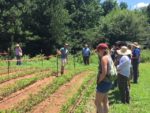
Georgia Farmer Exploring the Use of Compost Tea to Control Southern Stem Blight
DECATUR, Georgia – When summer temperatures rise and moisture increases in the Southeast, so does Southern stem blight – a hard-to-control fungal disease that can quickly turn your healthy, productive tomatoes, squash or peppers into wilting, decaying plants. Southern stem blight is a nightmare for small-scale vegetable producers, especially those who follow organic practices and […]
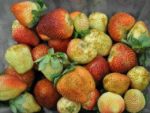
Adding Flowering Plants to Strawberry Fields to Enhance Pest Management and Biodiversity
WIMAUMA, Florida -- Over the last few years, Florida strawberry growers have been faced with declining market prices, increased global competition, and suspected and documented cases of insecticide resistance. In addition, growing concerns for overall environmental health have increased as we see trends of habitat loss and declining biodiversity, specifically of natural enemies and pollinators. […]
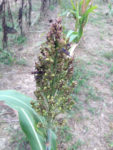
Innovations in Large-Scale Trap Cropping for Reducing Insect Pests
Trap cropping is a unique pest prevention system that uses insect behavior to deter pest feeding. Benefits of trap cropping not only include effective pest management, but trap crops can also increase biodiversity, conserve natural enemies and reduce wind damage to main crops.

Hiding in Plain Sight
MCMINVILLE, Tennessee – Winter cover crops, specifically a ryegrass/crimson clover mix, appear to protect susceptible deciduous trees from the flatheaded appletree borer, while also effectively managing weeds, according to results of a Tennessee State University study. The results could be useful for orchards, nurseries, urban landscapes and agroforestry producers in managing the significant economic pest. […]
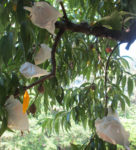
Paper or Pesticides? Bagging Peaches Protects from Insects and Diseases, Increases Yields
SENECA, South Carolina – When Clemson fruit specialist Juan Carlos Melgar suggested putting a paper bag over a peach to detract insects and diseases during production, farmers laughed. But when the trials, funded by a Southern Sustainable Agriculture Research & Education grant, showed that the technique protects the fruit from devastating brown rot, marauding insects […]
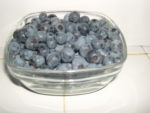
University of Kentucky Resources for Small Fruit Growers
LEXINGTON, Kentucky – University of Kentucky Cooperative Extension, through a Southern Sustainable Agriculture Research and Education (SSARE) On-Farm Research Grant, has developed a series of outreach materials for small fruit producers to aid in disease management. “Like many diseases of small fruit, they are best managed using cultural practices, such as sanitation. Thus, we developed […]
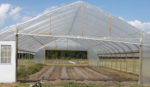
Berries Thrive in High Tunnels, But Be Aware of Pests, According to University of Arkansas Study
FAYETTEVILLE, Arkansas – A University of Arkansas study has found that using high tunnels in berry production can increase yields, extend the harvest season, and improve fruit quality compared to field production. However, care must be taken to manage pests. In the Southern Sustainable Agriculture Research & Education (SSARE)-funded project (LS12-250), “Extending the Market Season […]
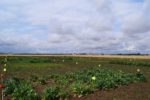
Cover Crops Acting as Trap Crops Protect Vegetables from Pests
LIVE OAK, Florida – For farmers in central Florida, planting cover crops in strips as a trap crop alongside cash crops is proving to be a highly effective method for attracting beneficial insects and controlling pests. Farmers have been so pleased with the results that they have fully adopted the Integrated Pest Management (IPM) strategy […]
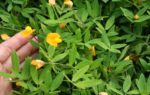
Cover Crops Reduce Pest Numbers and Improve Cash Crop Yields
GAINESVILLE, Florida – Preliminary research from University of Florida has found that incorporating root-knot nematode-resistant cover crops in a perennial peanut rotation reduces pest numbers in the cash crop and improves yields. The results may be helpful for producers who choose top-yielding, yet susceptible, peanut cultivars, as well as resistant cultivars that historically carry a […]

Cover Crops Can Help Control Pests by Fostering Natural Enemies
TALLAHASSEE, Florida – Cover crops used as refuge crops in vegetable production can control insect pests by fostering populations of natural enemies and competitor non-virus vectoring species, based on the results of USDA-ARS research. Research entomologists Stephen Hight with the USDA-ARS Insect Behavior and Biocontrol Research Unit in Florida, and Stuart Reitz with Oregon State […]
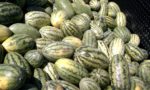
UGA Studying Biocontrol Method to Control Cucurbit Diseases
ATHENS, Georgia – Some species of naturally occurring bacteria, when applied to the flowers of watermelon plants, can reduce the spread of bacterial fruit blotch – a cucurbit disease that causes fruit rot and economic losses. The technique of applying bacteria to the stigmas of female flowers to slow the spread of bacterial fruit blotch […]
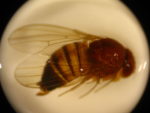
Expanding the IPM Toolbox to Fight Spotted Wing Drosophila
GAINESVILLE, Florida – University of Florida researchers are expanding the Integrated Pest Management (IPM) toolbox for blueberry growers fighting the spotted wing Drosophila (Drosophila suzukii) – a destructive pest of small fruit crops. Through a Southern Sustainable Agriculture Research & Education (SSARE) Graduate Student Grant (GS12-114), entomology graduate student Lindsy Iglesias, along with professor Oscar […]