Showing 101-120 of 161 results
Perennial Peanuts Shine as N Fertilizer Alternatives in Forage Production
MARIANNA, Florida – Perennial peanuts incorporated in forage grass production, such as bermudagrass and bahiagrass, continue to shine as nitrogen fertilizer alternatives to commercial inputs, according to University of Florida research. Based on the results of a Southern Sustainable Agriculture Research & Education (SSARE) Graduate Student Grant, warm-season perennial legumes, in some cases, reduced nitrogen […]

Cover Crops Can Help Control Pests by Fostering Natural Enemies
TALLAHASSEE, Florida – Cover crops used as refuge crops in vegetable production can control insect pests by fostering populations of natural enemies and competitor non-virus vectoring species, based on the results of USDA-ARS research. Research entomologists Stephen Hight with the USDA-ARS Insect Behavior and Biocontrol Research Unit in Florida, and Stuart Reitz with Oregon State […]
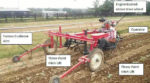
Prototype Farm Machine Expands Applications in Organic Vegetable Crop Production
LEXINGTON, Kentucky – University of Kentucky researchers have designed, built and tested a low-cost, mechanized system for organic vegetable production to help small-scale growers reduce their labor costs, increase their scale of operations, reduce input costs and increase production compared to conventional organic production practices. In a Southern Sustainable Agriculture Research and Education (SSARE) On-Farm […]
Compost Made with Freshwater Fish Improves Vegetable Yields Based on South Carolina Farmer Study
JOHNS ISLAND, South Carolina – Compost made from freshwater fish appears to perform just as well as compost made from saltwater fish in vegetable production, based on the results of a Southern Sustainable Agriculture Research & Education (SSARE) farmer project. The results point to increased opportunities of using freshwater fish waste as compost in areas […]
Artificial Light Sources in Chicken Houses Increase Egg Laying in Hens During Fall and Winter
COMMERCE, Texas – Research at Texas A&M University-Commerce has found that adding a safe, artificial light source to the coops of pasture-raised poultry increases egg laying in hens in the fall and winter – a time of the year when egg production in pasture poultry generally declines. Graduate student Margaret Morgan said that the main […]
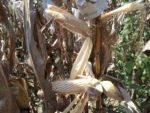
Breeding Organic Corn Varieties to Resist GMO Contamination
KNOXVILLE, Tennessee – Breeders with the University of Tennessee are developing organic corn varieties that cannot be contaminated by GMO corn (genetically modified organisms) via cross-pollination. A corn ear from a Ga1s line pollinated with pollen from a GMO corn hybrid (upper ear with no seeds) and the same line pollinated with pollen from a […]
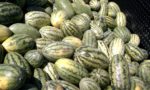
UGA Studying Biocontrol Method to Control Cucurbit Diseases
ATHENS, Georgia – Some species of naturally occurring bacteria, when applied to the flowers of watermelon plants, can reduce the spread of bacterial fruit blotch – a cucurbit disease that causes fruit rot and economic losses. The technique of applying bacteria to the stigmas of female flowers to slow the spread of bacterial fruit blotch […]
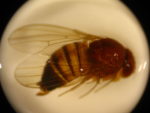
Expanding the IPM Toolbox to Fight Spotted Wing Drosophila
GAINESVILLE, Florida – University of Florida researchers are expanding the Integrated Pest Management (IPM) toolbox for blueberry growers fighting the spotted wing Drosophila (Drosophila suzukii) – a destructive pest of small fruit crops. Through a Southern Sustainable Agriculture Research & Education (SSARE) Graduate Student Grant (GS12-114), entomology graduate student Lindsy Iglesias, along with professor Oscar […]
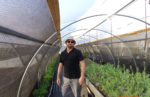
High Tunnel Pest Exclusion System
Insect pests are one of the major problems in organic production systems. Organic IPM practice consists of a three-tiered approach consisting of systems-based practices, mechanical tactics, and biorational insecticides. Mechanical tactics encourage the use of physical barriers for pest exclusion. This bulletin provides preliminary research data and field observations about the success of shade cloths, or high tunnel pest exclusion (HTPE) systems, as a more permanent barrier system around the high tunnels.
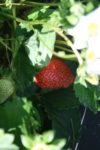
Evaluating Nutrient, Soil Health, and Economic Benefits of Compost Additions to Summer Cover Crops for Strawberries in North Carolina
Over the past 8 years, a team of multidisciplinary faculty and students at NC State University have conducted various field-based studies at the Center for Environmental Farming Systems (CEFS) and on-farm research examining the impact of summer cover crops, compost additions and applications of beneficial arbuscular mycorrhizal fungi and vermicompost on soil health, nutrient availability, and yields in conventional and organic strawberry production systems.
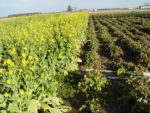
Cover Crops for Weed Management in Row Crops
The use of cover crops for weed control can help conventional producers combat herbicide-resistant weeds and organic producers reduce dependency on cultivation as their primary weed control mechanism.
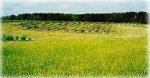
Perennial Grass Cover Crops Can Optimize Wine Grape Growth
Vineyard cover crops or ‘living mulch’ consists of either sown or native vegetation, grown in vineyard row middles and/or inclusive of the area under the vine trellis (Fig. 1). Although cover crops can increase pest pressure (arthropods and voles) and vineyard management costs, benefits of cover crops include: erosion and weed control, reduction of herbicide use and mitigation of excessive vine vigor.
High Tunnel Pest Exclusion System Part II
With the increasing demand for local foods across the Southeast, an increasing number of beginning, as well as experienced producers are producing vegetable crops in high tunnels for direct and whole sale markets. From the insect management perspective, it is extremely critical to adopt pest prevention practices; the high tunnel pest exclusion (HTPE) system is one of the best relatively-low cost pest preventive practices available to producers in the Southeast. This HTPE technology uses a variety of shade cloths for a relatively permanent pest prevention strategy. This bulletin provides information on the use of HTPE systems on the farm.
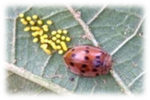
Sustainable Methods to Control Mexican Bean Beetle in Snap Beans
BLACKSBURG, Virginia – Reflective plastic mulches, such as silver (metalized) or white, significantly reduces populations of Mexican bean beetles on snap beans, while significantly increasing yields, according to the results of a Virginia Tech study. Mexican bean beetle (Epilachna varivestis Mulsant) is a serious pest of snap bean varieties, causing injury by feeding on the […]
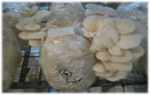
Producing Mushrooms on 100 Percent Waste Substrates
ASHEVILLE, North Carolina – A mushroom production and supply facility in Asheville, NC has had success in growing tree oysters on 100 percent waste stream substrates in a closed loop system. Though not as productive or biologically efficient as the commercial standard substrate, the waste substrates may provide a more cost-effective alternative for mushroom growers […]
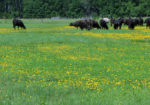
Integrating Perennial Peanut into Grass Pastures
GAINESVILLE, Florida -- Rhizoma peanut (commonly known as perennial peanut) is a warm-season perennial legume well adapted to Florida. It has high digestibility (65-75%) and crude protein concentrations (15-20%), that can really boost livestock performance. Integrating rhizoma peanut into bahiagrass pastures can almost double livestock performance, compared to bahiagrass alone (Figure 1). Rhizoma peanut also […]
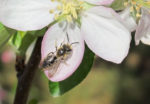
Artificial Nest Sites Boost Native Bees in Apple Orchards
LAWRENCEVILLE, Georgia – Researchers with Georgia Gwinnett College have found that creating artificial nesting sites for native bees helps to increase their abundance – a boon for producers looking to native bee species to pollinate their crops. For several years, zoologist and project coordinator Mark Schlueter and taxonomist Nick Stewart, have been surveying native bees […]
Arkansas Study Finding Ways to Integrate Poultry with Pasture Species and Agroforestry Production
FAYETTEVILLE, Arkansas – With the right tools for alternative feeding systems and pasture enrichment, farmers can successfully incorporate poultry into free-range, multi-species pasture or agroforestry production, based on the results of a USDA-ARS Arkansas study. The Southern Sustainable Agriculture Research & Education (SSARE)-funded project (LS10-226), “Integrating Free Range Poultry with Ruminant and Agroforestry Production in […]
Sustainable Blackberries and Raspberries
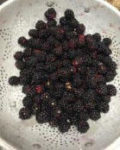
A handbook to guide growers in sustainable practices of fruit production from production practices to business management to marketing, for high tunnel and field production.
Sustainable High Plains Research Bulletins
A series of bulletins showcasing the various facets of Texas Tech University research on integrated crop and livestock production systems in the Texas High Plains. The bulletins cover sustainable agroecosystems, crops and soils, and water conservation.