Showing 41-58 of 58 results
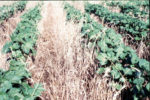
Economics of Cover Crops I: Profitability of Cover Crops in Row Crop Production and Federal Cost Share for Cover Crops
Many agronomic benefits of covers are also economic benefits. But there are real and perceived agronomic and economic challenges to adopting cover crops. Researchers at the USDA-ARS, National Soil Dynamics Laboratory (NSDL) in Auburn, Alabama and at the University of Georgia—Tifton have past and current research that addresses the challenges faced by producers.
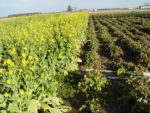
Cover Crops for Weed Management in Row Crops
The use of cover crops for weed control can help conventional producers combat herbicide-resistant weeds and organic producers reduce dependency on cultivation as their primary weed control mechanism.

Evaluating Nutrient, Soil Health, and Economic Benefits of Compost Additions to Summer Cover Crops for Strawberries in North Carolina
Over the past 8 years, a team of multidisciplinary faculty and students at NC State University have conducted various field-based studies at the Center for Environmental Farming Systems (CEFS) and on-farm research examining the impact of summer cover crops, compost additions and applications of beneficial arbuscular mycorrhizal fungi and vermicompost on soil health, nutrient availability, and yields in conventional and organic strawberry production systems.
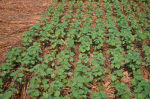
Cover Crop Establishment and Residue Management
Benefits associated with cover crops that may include erosion control, increased organic matter, increased water infiltration, and weed suppression are all typically enhanced as biomass levels increase. In order to ensure adequate levels of biomass, growers should recognize the importance of cover crop establishment.
Cover Crops and Soil Biology: What Do We Know?
Investigating soil biology is a wild, unpredictable zoological ride. From the smallest organisms on Earth (viruses) to earthworms, cover crop selection and management is affected by and influences soil biology in ways we cannot completely predict.
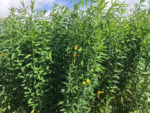
Economics of Cover Crops II (Part 2): Benefits of Cover Crops and No-Till Vegetable Production in North Alabama
While the benefits of cover crops are similar regardless of cash crop, there are a number of benefits that are particularly important to vegetable producers. The main benefits of cover crops in vegetable production include increased organic matter; additional N through the use of legumes; suppressing disease, nematodes, and weeds; reducing soil erosion; providing habitat for beneficial insects; and improving soil tilth.
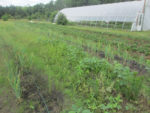
Cover Crops Effective in Controlling Bermudagrass in Organic Production
GLENWOOD, Georgia – Bermudagrass may be popular among homeowners in the Southeast, but it is widely loathed by vegetable producers – especially those in organic production. As a turfgrass, bermudagrass is valued for its durability, vigorous growth and tolerance to extreme weather conditions. But those characteristics also make it an obnoxious weed. Spreading rapidly by […]
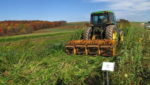
Survey Shows Expanded Acreage and Yield Boost from Cover Crops
For the third year in a row, a national survey of farmers has shown that cover crops improve corn and soybean yields while providing a host of other benefits. The survey of more than 1,200 farmers revealed that cover crops boosted 2014 corn yields by an average of 3.7 bushels per acre (2.1 percent) and […]
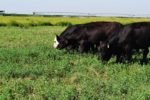
Agroecosystems Research in the Texas High Plains: Graduate student studies
Since 1997, over two dozen Master’s, PhD, and visiting students have conducted research and published articles related to sustainable integrated systems research in the Texas High Plains.The following are examples of current studies by Texas Tech University graduate students.
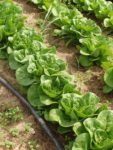
Intensive Crop Rotations with Cover Crops Give a Boost to High-Value Cash Crops in Organic Production
ATHENS, Georgia – University of Georgia researchers developing a model for organic vegetable production in the Southeast have found success incorporating summer cover crops with high-value cool-season crops in a series of rotations that increase yields, control insects and diseases, improve crop quality and build soil biomass. The systems approach, say the researchers, can be […]
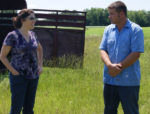
Using Cover Crops for Pest Management on Small Farms
LIVE OAK, Florida – Two small farmers in Live Oak, Florida are partnering with University of Florida Extension to determine how cover crops can be used to manage insect pests. In a newly funded Southern Sustainable Agriculture Research & Education (SSARE) On-Farm Research Grant, “Establishing and Evaluating Selected Cover Crops on Small Farms to Increase […]
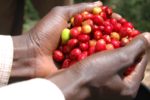
Weed Control in the Organic Coffee Field
A video created by University of Puerto Rico outlining sustainable methods for controlling weeds in organic coffee fields. NOTE: This video is in Spanish, with English subtitles.
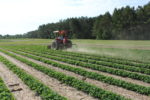
Organic Grain Production Video Series
A series of videos developed by University of Georgia, North Carolina State University and USDA-ARS on organic grain production.
Using Sunn Hemp as a Cover Crop in Oklahoma
OSU Extension fact sheet on sunn hemp as a cover crop.
Annual Cover Crops in Florida Vegetable Systems
Fact sheet series from the University of Florida IFAS Extension on integrating cover crops in vegetable production systems in Florida.
Organic Horticulture Training for the Southeast
An interactive website to help ag professionals develop successful organic education programs.
No-Till Wheat Production in Oklahoma
A fact sheet developed by Oklahoma Cooperative Extension Service on management considerations when switching from conventional till to no-till wheat production.

No-Till Cropping Systems in Oklahoma
This publication is designed to assist individuals interested in a no-till cropping system in making decisions that affect the production of their operation.