Showing 101-120 of 132 results
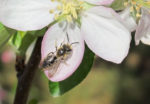
Artificial Nest Sites Boost Native Bees in Apple Orchards
LAWRENCEVILLE, Georgia – Researchers with Georgia Gwinnett College have found that creating artificial nesting sites for native bees helps to increase their abundance – a boon for producers looking to native bee species to pollinate their crops. For several years, zoologist and project coordinator Mark Schlueter and taxonomist Nick Stewart, have been surveying native bees […]
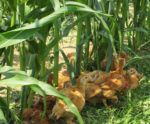
Arkansas Study Finding Ways to Integrate Poultry with Pasture Species and Agroforestry Production
FAYETTEVILLE, Arkansas – With the right tools for alternative feeding systems and pasture enrichment, farmers can successfully incorporate poultry into free-range, multi-species pasture or agroforestry production, based on the results of a USDA-ARS Arkansas study. The Southern Sustainable Agriculture Research & Education (SSARE)-funded project (LS10-226), “Integrating Free Range Poultry with Ruminant and Agroforestry Production in […]
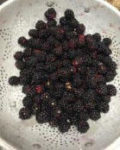
Sustainable Blackberries and Raspberries
A handbook to guide growers in sustainable practices of fruit production from production practices to business management to marketing, for high tunnel and field production.
Sustainable High Plains Research Bulletins
A series of bulletins showcasing the various facets of Texas Tech University research on integrated crop and livestock production systems in the Texas High Plains. The bulletins cover sustainable agroecosystems, crops and soils, and water conservation.
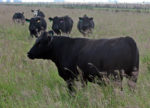
Sustainable Crop/Livestock Systems in the Texas High Plains: Phase I
In a Southern SARE-funded project (LS97-082), “Sustainable Crop/Livestock Systems in the Texas High Plains”, Texas Tech University researchers hypothesized that viable grazing systems could be developed and that by integrating crops, forage, and livestock in production systems, their complementary benefits would allow a more sustainable use of water and soil while maintaining an appropriate level of crop and livestock production.
Sustainable Crop/Livestock Systems in the Texas High Plains: Phase III
In the Southern SARE-funded project (LS08-202), “Crop-Livestock Systems for Sustainable High Plains Agriculture,” the project continued into Phase III with system modifications and revisions to target greater water savings and profitability, and address emerging issues.
Agroecosystems Economics in the Texas High Plains: A 10-year analysis, 1999-2008
Based on 10 years of Texas Tech University research, integrated cotton-forage-beef cattle systems are just as profitable as cotton monoculture systems. But there’s more. Integrated crop-livestock systems use less irrigation water, are more energy efficient, preserve soils by reducing wind erosion, and have a lower economic risk related to specific-loss events, such as a drought.
Agroecosystems Research in the Texas High Plains: Graduate student studies
Since 1997, over two dozen Master’s, PhD, and visiting students have conducted research and published articles related to sustainable integrated systems research in the Texas High Plains.The following are examples of current studies by Texas Tech University graduate students.
Water Conservation in the Texas High Plains: A systems research model of sustainable agroecosystems
The objective of the initial SARE grant, (LS97-082), “Sustainable Crop/Livestock Systems in the Texas High Plains,” was simple: Demonstrate that farmers can save water through an alternative production approach to monoculture cotton.
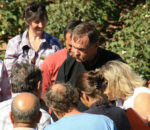
Texas Alliance for Water Conservation: Farmers teaching farmers how to manage water like money
For over a decade, producers across the Texas High Plains have been educating other producers on production methods and new technologies that help save water.
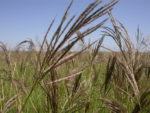
Water Use of Old World Bluestems in the Texas High Plains: SARE research summary, 2001-2003
In a Southern SARE-funded Graduate Student Grant (GS02-012), “Optimizing Water Use for Three Old World Bluestems in the Texas High Plains,” Texas Tech University researchers evaluated three old world bluestem species under dryland, and low, medium and high irrigation levels to determine water use efficiency, yield and nutritive value over a three-year period.
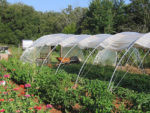
High Tunnel Crop Production Handbook
A high tunnel crop production handbook from Alabama Cooperative Extension.
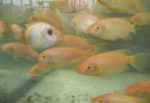
Economic Analysis of Commercial Aquaponic Production Systems
Three case studies of aquaponic production systems in Texas, Florida and the U.S. Virgin Islands that show commercial aquaponics systems can be economically viable options for producers.
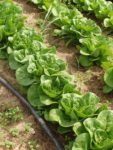
Intensive Crop Rotations with Cover Crops Give a Boost to High-Value Cash Crops in Organic Production
ATHENS, Georgia – University of Georgia researchers developing a model for organic vegetable production in the Southeast have found success incorporating summer cover crops with high-value cool-season crops in a series of rotations that increase yields, control insects and diseases, improve crop quality and build soil biomass. The systems approach, say the researchers, can be […]
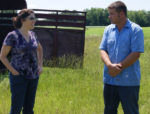
Using Cover Crops for Pest Management on Small Farms
LIVE OAK, Florida – Two small farmers in Live Oak, Florida are partnering with University of Florida Extension to determine how cover crops can be used to manage insect pests. In a newly funded Southern Sustainable Agriculture Research & Education (SSARE) On-Farm Research Grant, “Establishing and Evaluating Selected Cover Crops on Small Farms to Increase […]
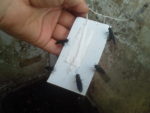
Black Soldier Fly Integral Component of Sustainable Ag at Georgia Farm
BLUFFTON, Georgia – The black soldier fly has turned out to be a key contributor to the sustainable agriculture efforts of one South Georgia farm. For the past two years, the indigenous insect has been at the center of a Southern Sustainable Agriculture Research & Education (SSARE) Producer study at White Oak Pastures to determine […]
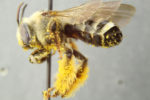
Finding a Fit for Native Pollinators in North Florida Sustainable Farm Management
GAINESVILLE, Florida – Natural landscapes surrounding North-central Florida farms may influence native pollinator diversity along with on-farm vegetation management, according to preliminary results of a University of Florida study. The findings may be useful to farmers interested in encouraging the number and types of native bees that visit their farms. Rosalyn Johnson, a graduate student […]
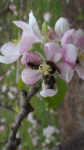
Looking for the Right Bee for Your Apple Orchards? Say Hello to the Native Mining Bee
LAWRENCEVILLE, Georgia – Commercial Georgia apple producers looking for an alternative to the honeybee to pollinate their orchards can say hello to the native mining bee (Andrena crataegi). Georgia Gwinnett College researchers have named the mining bee Georgia’s “apple bee,” for its abundance in north Georgia apple orchards and its efficiency in pollinating blossoms. The […]
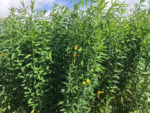
Using Sunn Hemp as a Cover Crop in Oklahoma
OSU Extension fact sheet on sunn hemp as a cover crop.
Organic Grain Production Video Series
A series of videos developed by University of Georgia, North Carolina State University and USDA-ARS on organic grain production.