Showing 81-100 of 161 results
NCSU Explores Regionally Adapted Legumes as Forage and Cover Crops
RALEIGH, North Carolina – North Carolina State University researchers are working to expand the portfolio of crops farmers can use in grain, forage and cover crop production. Through a Southern Sustainable Agriculture Research & Education (SSARE) Graduate Student grant, student Rachel Atwell Vann and organic cropping specialist Chris Reberg-Horton field tested 19 winter pea (Pisum […]
Get the Most Out of Forage Systems for Goats with Sunn Hemp
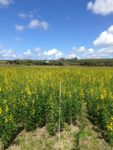
TUSKEGEE, Alabama – Small ruminant producers in the Southeast can potentially graze their goats year-round on a forage-based production system by incorporating a summer legume, such as sunn hemp, into the traditional bermudagrass pasture. Tuskegee University animal scientist Byeng-ryel Min found that a summer sunn hemp/bermudagrass forage mixture, or sunn hemp alone, followed by winter […]
Texas Producer Finds Asparagus Can Be Viable in the South Nearly Year-Round
LYFORD, Texas -- A south Texas producer, interested in increasing the diversity of crop production for local farmers, has found that asparagus can be grown in the Texas heat practically year-round by mimicking the “die-back” that occurs in the plants during dormancy in colder climates. With a Southern Sustainable Agriculture Research & Education (SSARE) Producer […]
Innovations in Large-Scale Trap Cropping for Reducing Insect Pests
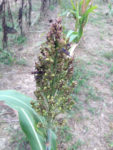
Trap cropping is a unique pest prevention system that uses insect behavior to deter pest feeding. Benefits of trap cropping not only include effective pest management, but trap crops can also increase biodiversity, conserve natural enemies and reduce wind damage to main crops.
Fewer Greenhouse Gases Released When Cattle Graze on Legume-rich Grass Pastures Compared to Nitrogen Fertilized Pastures
GAINESVILLE, Florida – Beef cattle that graze on legume-enriched grass pastures release fewer greenhouse gases compared with the typical nitrogen fertilization regimes in the Southeastern U.S., based on the limited results of a Southern Sustainable Agriculture Research & Education (SSARE)-funded study at University of Florida. The results offer a sustainable grazing management alternative for those […]
NCSU Researchers Develop Protocol for Measuring Food Waste on the Farm
RALEIGH, North Carolina – A North Carolina State University study quantifying food waste on the farm seems to suggest that the amount of edible and marketable vegetable crops being left in the field after primary harvest is much higher than previously thought. In a Southern Sustainable Agriculture Research & Education (SSARE) Graduate Student Grant, researchers […]
Sun-Baked Virginia Farm Blooms Under a Berm and Swale Permaculture System
KENBRIDGE, Virginia -- It’s 90 degrees, but feels like 105 on the empty white road cutting across Virginia’s flat, coastal plains. There hasn’t been rain in a month and the fields of corn clicking past are curled to grey spikes. The soil between the rows looks like powdered rust. But it’s here, hidden behind pine […]

Hiding in Plain Sight
MCMINVILLE, Tennessee – Winter cover crops, specifically a ryegrass/crimson clover mix, appear to protect susceptible deciduous trees from the flatheaded appletree borer, while also effectively managing weeds, according to results of a Tennessee State University study. The results could be useful for orchards, nurseries, urban landscapes and agroforestry producers in managing the significant economic pest. […]
Getting a Glimpse of Sustainable Agriculture in Tennessee
NASHVILLE, Tennessee – Sustainable agriculture is growing in Tennessee and members of the Southern Sustainable Agriculture Research and Education (SSARE) program got a glimpse recently of the innovations, research, and marketing and productions methods driving that growth. Nearly 50 SSARE staff, members of the Administrative Council, and state ag coordinators were treated to a daylong […]
Bringing Velvet Bean Back as a Grazing Forage
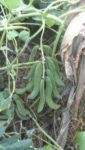
MANOR, Georgia – Motorists passing through rural Manor, GA along Highway 122, perhaps on their way to Waycross, were puzzled by the mystery crop growing on a portion of Lynn Barber’s Heritage Acres farm. “Some of the older farmers knew exactly what it was, but a lot of people were stopping to ask me if […]
Some Invasive Trees are Good for Mushroom Production
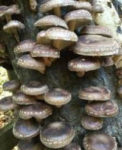
TALLAHASSEE, Florida – Some non-native invasive trees in the Southeast have proven to be ideal substrates for growing edible mushrooms, according to the results of a USDA Agricultural Research Service study funded by a Southern Sustainable Agriculture Research & Education (SSARE) On-Farm Research Grant. USDA-ARS researcher Stephen Hight, in collaboration with small farmers in southern […]
Wildflowers Draw Native Pollinators to Georgia Apple Orchard, Yields Increase
McCAYSVILLE, Georgia – Joe Dickey’s curiosity about bees nearly matches his affinity for birds. “I’ve loved birds ever since I was a kid because of all their different colors,” said Dickey, as he watches yellow finches fly around three 100X100-foot wildflower plots at his farm, Mountain View Orchards. But it’s the bees that are capturing […]
Video: How a Farmer Used SARE to Develop Virginia's Organic Ginger Market
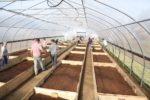
The Virginia’s craft brewing industry is bubbling – 58 breweries in 2013 - 103 today. The beverage industry and Asian restaurants both value locally sourced ginger. While a great deal is known about growing this tropical in the warmer eastern coastal plains, Virginia's Piedmont farmers cannot access these markets. On a December morning, it’s 27 […]
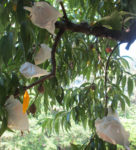
Paper or Pesticides? Bagging Peaches Protects from Insects and Diseases, Increases Yields
SENECA, South Carolina – When Clemson fruit specialist Juan Carlos Melgar suggested putting a paper bag over a peach to detract insects and diseases during production, farmers laughed. But when the trials, funded by a Southern Sustainable Agriculture Research & Education grant, showed that the technique protects the fruit from devastating brown rot, marauding insects […]
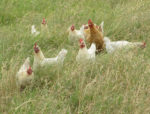
SARE Fellows Tour, a Look at Sustainable Ag Across the Country, Makes a Stop in Texas
D’HANIS, Texas -- Travis Krause lets out a loud cattle call. Within seconds, his herd appears in the distance among the tall grass, brush and trees of the South Texas Plains, and makes a fast trot to where the young farmer is standing. The animals line up side by side as if preparing for a […]
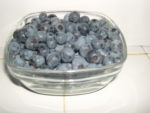
University of Kentucky Resources for Small Fruit Growers
LEXINGTON, Kentucky – University of Kentucky Cooperative Extension, through a Southern Sustainable Agriculture Research and Education (SSARE) On-Farm Research Grant, has developed a series of outreach materials for small fruit producers to aid in disease management. “Like many diseases of small fruit, they are best managed using cultural practices, such as sanitation. Thus, we developed […]
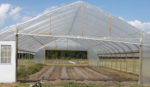
Berries Thrive in High Tunnels, But Be Aware of Pests, According to University of Arkansas Study
FAYETTEVILLE, Arkansas – A University of Arkansas study has found that using high tunnels in berry production can increase yields, extend the harvest season, and improve fruit quality compared to field production. However, care must be taken to manage pests. In the Southern Sustainable Agriculture Research & Education (SSARE)-funded project (LS12-250), “Extending the Market Season […]
Cover Crops Acting as Trap Crops Protect Vegetables from Pests
LIVE OAK, Florida – For farmers in central Florida, planting cover crops in strips as a trap crop alongside cash crops is proving to be a highly effective method for attracting beneficial insects and controlling pests. Farmers have been so pleased with the results that they have fully adopted the Integrated Pest Management (IPM) strategy […]
A Natural Method of Reducing Post-Harvest Fruit Decay Found
FORT PIERCE, Florida – University of Florida researchers, through a Southern Sustainable Agriculture Research & Education grant, have found a natural method of reducing post-harvest citrus fruit decay. In a SSARE Graduate Student Grant study, researchers found that essential oils, specifically carvacrol and thymol, significantly decrease ‘Ruby Red’ grapefruit natural decay, weight loss and chilling […]
Cover Crops Reduce Pest Numbers and Improve Cash Crop Yields
GAINESVILLE, Florida – Preliminary research from University of Florida has found that incorporating root-knot nematode-resistant cover crops in a perennial peanut rotation reduces pest numbers in the cash crop and improves yields. The results may be helpful for producers who choose top-yielding, yet susceptible, peanut cultivars, as well as resistant cultivars that historically carry a […]