Showing 281-300 of 327 results
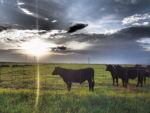
Sustainable Crop/Livestock Systems in the Texas High Plains: Phase III
In the Southern SARE-funded project (LS08-202), “Crop-Livestock Systems for Sustainable High Plains Agriculture,” the project continued into Phase III with system modifications and revisions to target greater water savings and profitability, and address emerging issues.
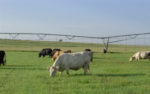
Diversifying in the Texas High Plains: Examples of agroecosystems models
The following system configurations are examples of the diversified crop/livestock production practices that have been studied across the Texas High Plains since 1997. These systems have been tested against cotton monoculture –a subsurface drip-irrigated system farmed with conventional cultural practices recommended for the High Plains region.
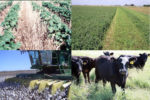
Agroecosystems Economics in the Texas High Plains: A 10-year analysis, 1999-2008
Based on 10 years of Texas Tech University research, integrated cotton-forage-beef cattle systems are just as profitable as cotton monoculture systems. But there’s more. Integrated crop-livestock systems use less irrigation water, are more energy efficient, preserve soils by reducing wind erosion, and have a lower economic risk related to specific-loss events, such as a drought.
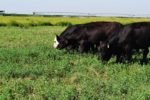
Agroecosystems Research in the Texas High Plains: Graduate student studies
Since 1997, over two dozen Master’s, PhD, and visiting students have conducted research and published articles related to sustainable integrated systems research in the Texas High Plains.The following are examples of current studies by Texas Tech University graduate students.
Water Conservation in the Texas High Plains: A systems research model of sustainable agroecosystems
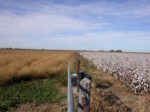
The objective of the initial SARE grant, (LS97-082), “Sustainable Crop/Livestock Systems in the Texas High Plains,” was simple: Demonstrate that farmers can save water through an alternative production approach to monoculture cotton.
Soil Quality of Integrated Crop/Livestock Systems: Enhancing soil carbon sequestration and microbial diversity
In the Southern SARE-funded study (LS10-229), “Integrated Crop and Livestock Systems for Enhanced Soil Carbon Sequestration and Microbial Diversity in the Semi-arid Texas High Plains,” Texas Tech University researchers evaluated integrated crop/livestock systems for long-term soil quality by assessing microbial activity and soil carbon storage.
Cover Crops and Cotton in the Texas High Plains: SARE research summary, 2007-2009
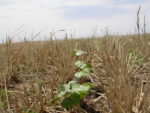
In a Southern SARE-funded Graduate Student Grant (GS07-056), “Allelopathic Effects of Small Grain Cover Crops on Cotton Plant Growth and Yields,” Texas Tech University researchers investigated allelopathy as the possible cause of the observed suppression and to incorporate livestock grazing as a means of reducing the allelopathic effects on the cotton crop.
Water Use of Old World Bluestems in the Texas High Plains: SARE research summary, 2001-2003
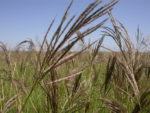
In a Southern SARE-funded Graduate Student Grant (GS02-012), “Optimizing Water Use for Three Old World Bluestems in the Texas High Plains,” Texas Tech University researchers evaluated three old world bluestem species under dryland, and low, medium and high irrigation levels to determine water use efficiency, yield and nutritive value over a three-year period.
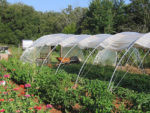
High Tunnel Crop Production Handbook
A high tunnel crop production handbook from Alabama Cooperative Extension.
Management of Mexican Bean Beetle in Snap Beans Using Cultural Control Strategies
A series of fact sheets from Virginia Tech on cultural control strategies to manage the Mexican bean beetle, a pest of snap beans.
Economic Analysis of Commercial Aquaponic Production Systems
Three case studies of aquaponic production systems in Texas, Florida and the U.S. Virgin Islands that show commercial aquaponics systems can be economically viable options for producers.
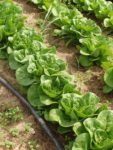
Intensive Crop Rotations with Cover Crops Give a Boost to High-Value Cash Crops in Organic Production
ATHENS, Georgia – University of Georgia researchers developing a model for organic vegetable production in the Southeast have found success incorporating summer cover crops with high-value cool-season crops in a series of rotations that increase yields, control insects and diseases, improve crop quality and build soil biomass. The systems approach, say the researchers, can be […]
Stink Bug Pest a Challenge to Control Sustainably, But Strategies Exist
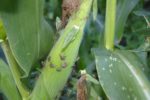
BLACKSBURG, Virginia – Virginia Tech entomologists studying Integrated Pest Management (IPM) techniques to manage the brown marmorated stink bug have found that it’s one tough pest to control sustainably. Based on the results of a Southern Sustainable Agriculture Research & Education On-Farm Research grant to manage the brown marmorated stink bug on peppers, control via […]
Native Warm Season Grasses Diversify Livestock Grazing/Support Biodiversity
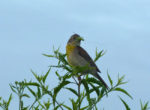
MISSISSIPPI STATE, Mississippi – Native warm season grasses excel over more traditional commercial grass varieties when it comes to grazing livestock and promoting wildlife conservation, based on the results of a two-year Mississippi State University agroecology study. The study, funded by a Southern Sustainable Agriculture Research & Education (SSARE) Graduate Student grant, compared native warm […]
Biocontrol Methods for Protecting Honeybees Against Pests
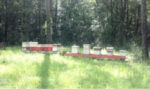
TALLAHASSEE, Florida -- Research from Florida A&M University has found that fungal pathogens can effectively and economically control the small hive beetle (Aethina tumida) – an invasive pest of honeybees – while maintaining colony health. The results pave the way for more environmentally friendly biological controls in a pest management program. Through a Southern Sustainable […]
North Carolina Land Trust Helping Beginning Farmers in an Effort that Blends Conservation with Sustainable Ag
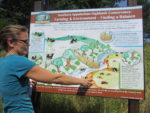
ALEXANDER, North Carolina – Over 100 acres of gently rolling grazing land, woodlands and stream corridors just outside of Asheville, NC is the site of an educational effort spearheaded by the Southern Appalachian Highlands Conservancy that combines environmental conservation with agriculture using sustainable ag practices. The program, known as the “Community Farm & Food Project: […]
Using Cover Crops for Pest Management on Small Farms
LIVE OAK, Florida – Two small farmers in Live Oak, Florida are partnering with University of Florida Extension to determine how cover crops can be used to manage insect pests. In a newly funded Southern Sustainable Agriculture Research & Education (SSARE) On-Farm Research Grant, “Establishing and Evaluating Selected Cover Crops on Small Farms to Increase […]
Black Soldier Fly Integral Component of Sustainable Ag at Georgia Farm
BLUFFTON, Georgia – The black soldier fly has turned out to be a key contributor to the sustainable agriculture efforts of one South Georgia farm. For the past two years, the indigenous insect has been at the center of a Southern Sustainable Agriculture Research & Education (SSARE) Producer study at White Oak Pastures to determine […]
Native Grasses Good Food Sources for Livestock; Perform Best as Grazing Forages
IUKA, Mississippi – A Mississippi livestock producer has found that native warm-season grasses pack more of a nutritional punch than commercial non-native forages, but he recommends that the grasses be grown for grazing rather than for hay. Tulon McKee, Jr. of McKee Farms received a Southern Sustainable Agriculture Research & Education (SSARE) Producer Grant to […]
UGA Researcher Studying Durana White Clover as Living Mulch in Corn Fields
TIFTON, Georgia -- Adding nitrogen to fertilize their crop is a substantial expense corn farmers have to consider when calculating their bottom line. A University of Georgia scientist hopes to help lower that cost by planting clover and corn together. With a $224,000 grant from the Southern Sustainable Agriculture Research and Education program, UGA researcher […]