Showing 21-34 of 34 results
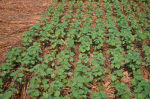
Cover Crop Establishment and Residue Management
Benefits associated with cover crops that may include erosion control, increased organic matter, increased water infiltration, and weed suppression are all typically enhanced as biomass levels increase. In order to ensure adequate levels of biomass, growers should recognize the importance of cover crop establishment.

Evaluating Nutrient, Soil Health, and Economic Benefits of Compost Additions to Summer Cover Crops for Strawberries in North Carolina
Over the past 8 years, a team of multidisciplinary faculty and students at NC State University have conducted various field-based studies at the Center for Environmental Farming Systems (CEFS) and on-farm research examining the impact of summer cover crops, compost additions and applications of beneficial arbuscular mycorrhizal fungi and vermicompost on soil health, nutrient availability, and yields in conventional and organic strawberry production systems.
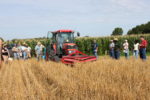
Equipment Demonstration and Conservation Systems Overview
Conservation tillage combined with high residue cover crops (Conservation Systems) can maximize residue production and minimize residue decomposition to promote the increase in organic matter across degraded soils of the Southeast, despite climatic conditions.
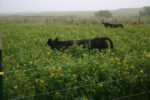
Grazing Cover Crops in Cropland
For some producers with extensive experience using cover crops, grazing can be a ‘next step’ in obtaining additional economic value while achieving environmental stewardship.
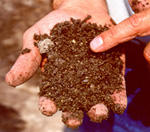
NRCS Campaign Overview: Unlocks Secrets in the Soil
Since the official launch of the Natural Resource Conservation Service’s (NRCS) “Unlock the Secrets in the Soil Campaign” in October of 2012, the soil health movement has continued to grow, with cover crop and soil health management system adoption rates climbing and stakeholder interest increasing throughout the nation.
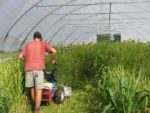
Soil Management Using Cover Crops in Organically Managed High Tunnels
In southern climates, high tunnels are typically used for season extension in the spring, fall, and winter. In the hot summer months, if no shade cloth is used to cover high tunnels, it can be difficult to grow anything but the most heat tolerant crops, and it can be uncomfortable to work in tunnels due to the heat. This is an excellent time to incorporate a cover crop, between the late spring and early fall crops. Many cover crops species are adapted to hot southern summers and perform well in high tunnels.
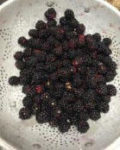
Sustainable Blackberries and Raspberries
A handbook to guide growers in sustainable practices of fruit production from production practices to business management to marketing, for high tunnel and field production.
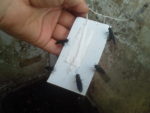
Black Soldier Fly Integral Component of Sustainable Ag at Georgia Farm
BLUFFTON, Georgia – The black soldier fly has turned out to be a key contributor to the sustainable agriculture efforts of one South Georgia farm. For the past two years, the indigenous insect has been at the center of a Southern Sustainable Agriculture Research & Education (SSARE) Producer study at White Oak Pastures to determine […]
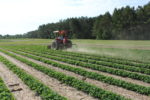
Organic Grain Production Video Series
A series of videos developed by University of Georgia, North Carolina State University and USDA-ARS on organic grain production.
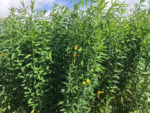
Using Sunn Hemp as a Cover Crop in Oklahoma
OSU Extension fact sheet on sunn hemp as a cover crop.
Annual Cover Crops in Florida Vegetable Systems
Fact sheet series from the University of Florida IFAS Extension on integrating cover crops in vegetable production systems in Florida.
Organic Horticulture Training for the Southeast
An interactive website to help ag professionals develop successful organic education programs.
No-Till Wheat Production in Oklahoma
A fact sheet developed by Oklahoma Cooperative Extension Service on management considerations when switching from conventional till to no-till wheat production.
No-Till Cropping Systems in Oklahoma
This publication is designed to assist individuals interested in a no-till cropping system in making decisions that affect the production of their operation.