Showing 21-39 of 39 results
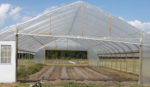
Berries Thrive in High Tunnels, But Be Aware of Pests, According to University of Arkansas Study
FAYETTEVILLE, Arkansas – A University of Arkansas study has found that using high tunnels in berry production can increase yields, extend the harvest season, and improve fruit quality compared to field production. However, care must be taken to manage pests. In the Southern Sustainable Agriculture Research & Education (SSARE)-funded project (LS12-250), “Extending the Market Season […]
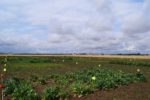
Cover Crops Acting as Trap Crops Protect Vegetables from Pests
LIVE OAK, Florida – For farmers in central Florida, planting cover crops in strips as a trap crop alongside cash crops is proving to be a highly effective method for attracting beneficial insects and controlling pests. Farmers have been so pleased with the results that they have fully adopted the Integrated Pest Management (IPM) strategy […]
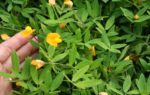
Perennial Peanuts Shine as N Fertilizer Alternatives in Forage Production
MARIANNA, Florida – Perennial peanuts incorporated in forage grass production, such as bermudagrass and bahiagrass, continue to shine as nitrogen fertilizer alternatives to commercial inputs, according to University of Florida research. Based on the results of a Southern Sustainable Agriculture Research & Education (SSARE) Graduate Student Grant, warm-season perennial legumes, in some cases, reduced nitrogen […]
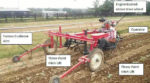
Prototype Farm Machine Expands Applications in Organic Vegetable Crop Production
LEXINGTON, Kentucky – University of Kentucky researchers have designed, built and tested a low-cost, mechanized system for organic vegetable production to help small-scale growers reduce their labor costs, increase their scale of operations, reduce input costs and increase production compared to conventional organic production practices. In a Southern Sustainable Agriculture Research and Education (SSARE) On-Farm […]
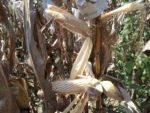
Breeding Organic Corn Varieties to Resist GMO Contamination
KNOXVILLE, Tennessee – Breeders with the University of Tennessee are developing organic corn varieties that cannot be contaminated by GMO corn (genetically modified organisms) via cross-pollination. A corn ear from a Ga1s line pollinated with pollen from a GMO corn hybrid (upper ear with no seeds) and the same line pollinated with pollen from a […]
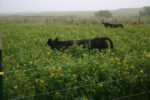
Grazing Cover Crops in Cropland
For some producers with extensive experience using cover crops, grazing can be a ‘next step’ in obtaining additional economic value while achieving environmental stewardship.
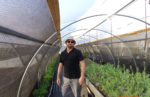
High Tunnel Pest Exclusion System
Insect pests are one of the major problems in organic production systems. Organic IPM practice consists of a three-tiered approach consisting of systems-based practices, mechanical tactics, and biorational insecticides. Mechanical tactics encourage the use of physical barriers for pest exclusion. This bulletin provides preliminary research data and field observations about the success of shade cloths, or high tunnel pest exclusion (HTPE) systems, as a more permanent barrier system around the high tunnels.
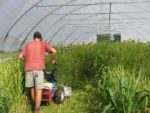
Soil Management Using Cover Crops in Organically Managed High Tunnels
In southern climates, high tunnels are typically used for season extension in the spring, fall, and winter. In the hot summer months, if no shade cloth is used to cover high tunnels, it can be difficult to grow anything but the most heat tolerant crops, and it can be uncomfortable to work in tunnels due to the heat. This is an excellent time to incorporate a cover crop, between the late spring and early fall crops. Many cover crops species are adapted to hot southern summers and perform well in high tunnels.
High Tunnel Pest Exclusion System Part II
With the increasing demand for local foods across the Southeast, an increasing number of beginning, as well as experienced producers are producing vegetable crops in high tunnels for direct and whole sale markets. From the insect management perspective, it is extremely critical to adopt pest prevention practices; the high tunnel pest exclusion (HTPE) system is one of the best relatively-low cost pest preventive practices available to producers in the Southeast. This HTPE technology uses a variety of shade cloths for a relatively permanent pest prevention strategy. This bulletin provides information on the use of HTPE systems on the farm.
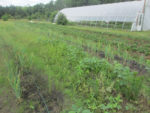
Cover Crops Effective in Controlling Bermudagrass in Organic Production
GLENWOOD, Georgia – Bermudagrass may be popular among homeowners in the Southeast, but it is widely loathed by vegetable producers – especially those in organic production. As a turfgrass, bermudagrass is valued for its durability, vigorous growth and tolerance to extreme weather conditions. But those characteristics also make it an obnoxious weed. Spreading rapidly by […]
Physical Pest Exclusion with Shade Cloth
Alabama farmer Will Mastin describes his experience using shade cloth on a high tunnel to protect crops from some pests. Mastin's trials with shade cloth were funded by a grant from Southern SARE. Throughout his project, Mastin worked with Alabama Extension entomologist and Southern SARE state coordinator Dr. Ayanava Majumdar to improve the shade cloth technology. […]
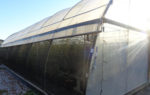
Net Houses Help Farmers in the Fight Against Pests
GRIFFIN, Georgia – For producers seeking to reduce their pesticide applications, practice Integrated Pest Management, or transition to organic production, a new technology is emerging across the Southeast that allows farmers to more effectively manage pests in high tunnels. A new bulletin, produced by Alabama Cooperative Extension and supported by the Southern Sustainable Agriculture Research […]
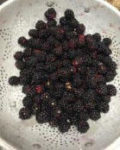
Sustainable Blackberries and Raspberries
A handbook to guide growers in sustainable practices of fruit production from production practices to business management to marketing, for high tunnel and field production.
Economic Analysis of Commercial Aquaponic Production Systems
Three case studies of aquaponic production systems in Texas, Florida and the U.S. Virgin Islands that show commercial aquaponics systems can be economically viable options for producers.
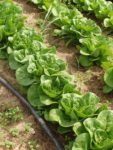
Intensive Crop Rotations with Cover Crops Give a Boost to High-Value Cash Crops in Organic Production
ATHENS, Georgia – University of Georgia researchers developing a model for organic vegetable production in the Southeast have found success incorporating summer cover crops with high-value cool-season crops in a series of rotations that increase yields, control insects and diseases, improve crop quality and build soil biomass. The systems approach, say the researchers, can be […]
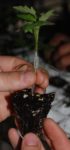
Techniques for Melon Grafting
A fact sheet developed by University of Florida that introduces commonly used grafting techniques to help farmers interested in grafting melon plants achieve a high-graft survival rate.
Organic Grain Production Video Series
A series of videos developed by University of Georgia, North Carolina State University and USDA-ARS on organic grain production.
Organic Horticulture Training for the Southeast
An interactive website to help ag professionals develop successful organic education programs.
No-Till Cropping Systems in Oklahoma
This publication is designed to assist individuals interested in a no-till cropping system in making decisions that affect the production of their operation.