Showing 1-20 of 25 results
Graduate Student Sustainable Agriculture Projects for FY2025 Announced
GRIFFIN, Georgia – The Southern Sustainable Agriculture Research & Education (SSARE) program has announced the funded projects for the 2025 Graduate Student Grants program. The SSARE Administrative Council recently funded 18 projects totaling $386,238. The Graduate Student Grants program is one of the few sustainable agriculture research funding opportunities open to Master’s and PhD students […]
Regenerative Grazing in the South: Case Studies from Texas, Arkansas, Mississippi and Virginia
A multistate team lead by the National Center for Appropriate Technology developed the following series of rancher profiles as part of a larger project to promote regenerative grazing and soil health throughout the South. Case Studies from Texas This publication explains historical factors that have created barriers to adoption and profiles a working group and […]
Aquatic Mammal Management on Agricultural Lands
These resources were created by Texas A&M AgriLife Extension to assist landowners in the sustainable management of ponds, wetlands and wildlife. This video addresses the control and management of problematic aquatic mammals, such as beavers and nutria, which can cause significant damage to aquatic ecosystems and infrastructure. It covers effective strategies and best practices for […]
Sustainable Upland Cotton Production
This project developed a set of 12 video training tools to enhance skills and knowledge about sustainable cotton production for Cooperative Extension agents. The 12 videos are listed below. They were created by a team from Texas A&M University, Louisiana State University, and Oklahoma State University. Cotton Growth and Development Beltwide Seed Quality Survey Basic Soil […]
Southern SARE Awards Young Scholar Enhancement Grants for 2025
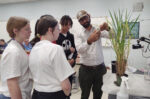
GRIFFIN, Georgia – The Southern Sustainable Agriculture Research and Education Grant program (SSARE) is giving young researchers an opportunity to learn more about sustainable agriculture. Through the James Harrison Hill, Sr. Young Scholar Enhancement Grant program, high school and undergraduate students are working alongside researchers on SSARE-funded projects, ranging from disease management to soil health […]
2024 Young Scholar Research Projects
GRIFFIN, Georgia – Ten Southern Sustainable Agriculture Research and Education Program 2024 James Harrison Hill, Sr. Young Scholar Enhancement (YES) Grants have been awarded a combined $49,195 throughout the region to engage youth in research processes and encourage their pursuit of college degrees that emphasize sustainable agriculture. As an extension of SSARE’s Research & Education Grants program, the YES grants allow […]
Legume Cover Crops Have Potential as a Nitrogen and Forage Source in Semi-arid West Texas
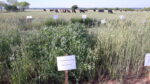
SAN ANGELO, Texas – Farmers in west Texas are eyeing legume cover crops as a nitrogen and forage source to fill fallow periods between dryland, no-till wheat and cotton crop rotations. But finding the best fit for the area’s environmental challenges is proving tricky. So Texas A&M University researchers are working with farmers to develop […]
Young Scholar Research Projects Introduce Students to STEM and Social Sciences
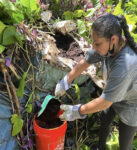
GRIFFIN, Georgia – The Southern Sustainable Agriculture Research and Education Grant program (SSARE) is giving young researchers an opportunity to learn more about sustainable agriculture. Through the James Harrison Hill, Sr. Young Scholar Enhancement Grant program, high school and undergraduate students are working alongside researchers on SSARE-funded projects, ranging from pollinators to nutrient management to […]

Drought-tolerant Feed Alternatives for Small Ruminants in Arid Texas
MARFA, Texas – Visitors to Big Bend Country in far West Texas come for the desert mountain views, mystery lights in the sky, a burgeoning art culture…and Malinda Beeman’s goats. Beeman and her partner Allan McClane run Marfa Maid Dairy – a 25 dairy goat herd operation where they sell artisan cheeses and give weekly […]
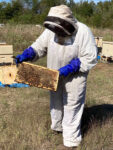
Texas Beekeeper Rethinking Bee Hive Boxes for More Honey and Better Bee Health
MABANK, Texas – Texas beekeeper Daniel Brantner has a simple and economical solution for increasing honey production and improving the health of honey bees: redesigning the industry-standard bee hive boxes. Brantner, owner of Texas Honey Company and a certified Texas master beekeeper, is using his skills as an architect to turn the typical standard 16”X22” […]
New Research Sheds Light on the Potential of Carbon Farming in Texas
Beginning in 2017, the Southern Sustainable Agriculture Research and Education program funded a grant project to study these questions and assembled a Texas-based team of university researchers, soil scientists, farmers, ranchers and specialists from the USDA.
Texas A&M Researchers Identify Ideal Cover Crop Species for Southeast Texas
COLLEGE STATION, Texas - Under the right conditions, cover crops are a tool for improvement. After harvesting a crop like cotton or grain sorghum, a cover crop rotation can increase soil organic matter, recycle nutrients, prevent erosion and suppress weeds. Even though farmers and ranchers across the Southeast have seen these benefits and moved towards […]
Researchers Study How to Prevent Cover Crops from Failing to Fix Nitrogen
EDINBURG, Texas- Known for their ability to produce nitrogen, legumes actually partner with rhizobium bacteria to create or fix nitrogen through specialized organs in their roots called nodules. This unique relationship adds nitrogen back to the soil so it can be used as fertilizer by future crops. In the Rio Grande Valley of Texas, researchers […]
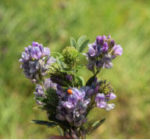
Integrating Legumes with Grass to Improve Forage-Livestock Systems
In a Southern SARE-funded Research and Education Grant (LS14-261), "Long-term Agroecosystems Research and Adoption in the Texas Southern High Plains -- Phase III," Texas Tech University researchers conducted a steer grazing trial comparing a grass only system to a grass-legume system for animal productivity and water use efficiency.
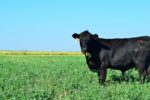
The Performance of Cover Crops in Minimally Tilled Forage-based Grazing Systems
In a Southern SARE-funded Graduate Student Grant (GS15-152), “Evaluation of Winter Annual Cover Crops Under Multiple Residue Management: Impacts on land management, soil water depletion, and cash crop productivity,” Texas Tech University researchers investigated five cover crops species as potential complements to a warm-season beef-stocker grazing system. The impact of the project was two-fold: Stabilize the soil surface from excessive wind erosion and desiccation; and strengthen rural communities by ensuring the persistence of profitable agriculture in the region.
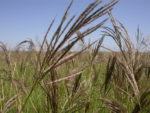
Water Use of Old World Bluestems in the Texas High Plains: SARE research summary, 2001-2003
In a Southern SARE-funded Graduate Student Grant (GS02-012), “Optimizing Water Use for Three Old World Bluestems in the Texas High Plains,” Texas Tech University researchers evaluated three old world bluestem species under dryland, and low, medium and high irrigation levels to determine water use efficiency, yield and nutritive value over a three-year period.
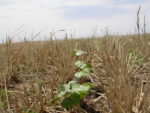
Cover Crops and Cotton in the Texas High Plains: SARE research summary, 2007-2009
In a Southern SARE-funded Graduate Student Grant (GS07-056), “Allelopathic Effects of Small Grain Cover Crops on Cotton Plant Growth and Yields,” Texas Tech University researchers investigated allelopathy as the possible cause of the observed suppression and to incorporate livestock grazing as a means of reducing the allelopathic effects on the cotton crop.
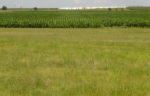
Soil Quality of Integrated Crop/Livestock Systems: Enhancing soil carbon sequestration and microbial diversity
In the Southern SARE-funded study (LS10-229), “Integrated Crop and Livestock Systems for Enhanced Soil Carbon Sequestration and Microbial Diversity in the Semi-arid Texas High Plains,” Texas Tech University researchers evaluated integrated crop/livestock systems for long-term soil quality by assessing microbial activity and soil carbon storage.
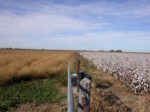
Water Conservation in the Texas High Plains: A systems research model of sustainable agroecosystems
The objective of the initial SARE grant, (LS97-082), “Sustainable Crop/Livestock Systems in the Texas High Plains,” was simple: Demonstrate that farmers can save water through an alternative production approach to monoculture cotton.
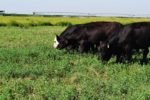
Agroecosystems Research in the Texas High Plains: Graduate student studies
Since 1997, over two dozen Master’s, PhD, and visiting students have conducted research and published articles related to sustainable integrated systems research in the Texas High Plains.The following are examples of current studies by Texas Tech University graduate students.